
No cuts before 5 km for smooth, fast travel; toll based on distance travelled
Road money will come from rising land prices; buying a home in outskirts to get costlier
Atul Singh
New Delhi, November 21.
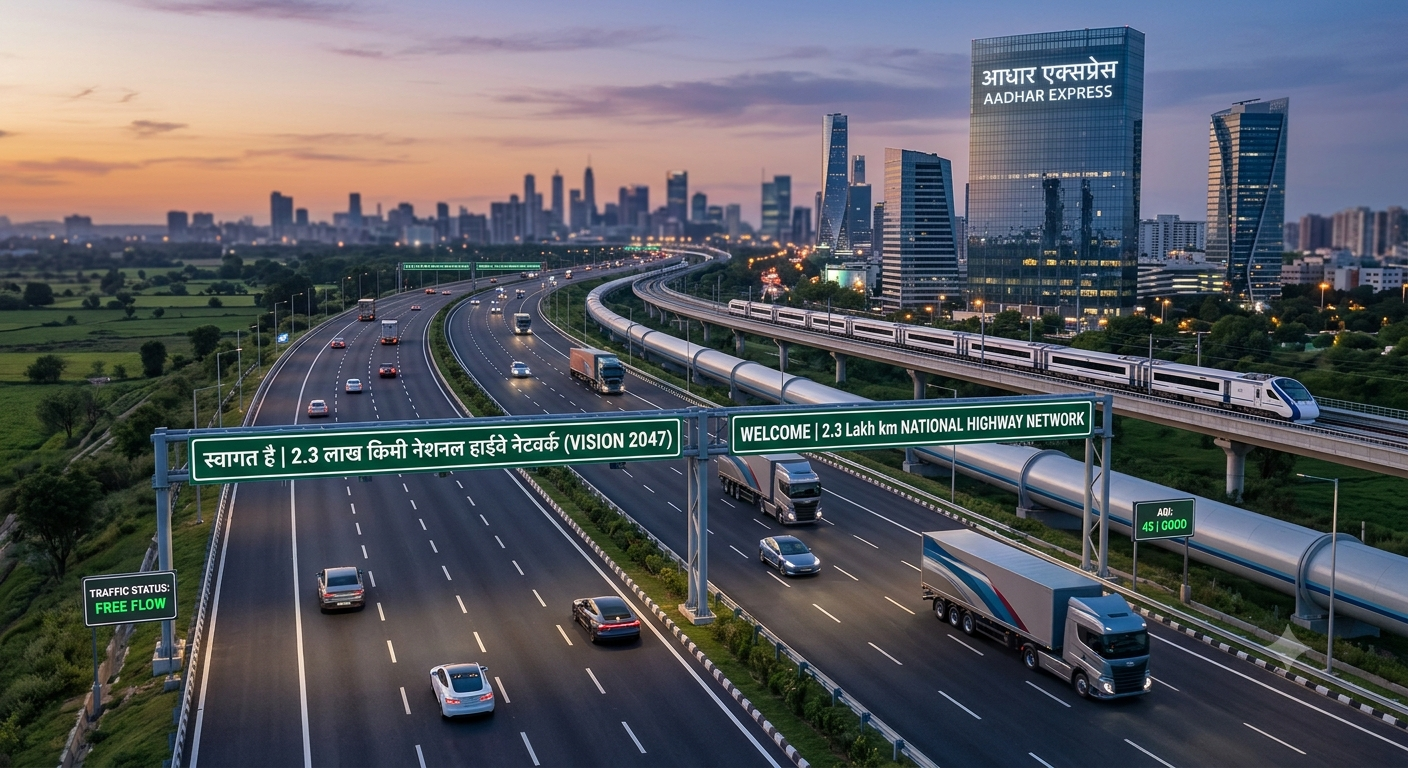
The new ring roads, bypasses, and elevated corridors being built outside 500 cities across the country are no longer just road projects, but are set to become a new model for easing urban congestion and funding infrastructure. Under the central government’s new Urban De-congestion Policy, major changes have been made to the rules governing construction, movement, and land for these roads. While this system will reduce chaotic traffic jams and intermediate cuts for long and fast travel, it will also have a direct impact on travel costs and property prices in outlying areas.
According to a senior official of the Ministry of Road Transport and Highways, the main objective of the new policy is to make routes outside cities jam-free and well-organized. Earlier, cuts or service lanes opening at intervals of one to two kilometers on many ring roads and bypasses increased local traffic pressure and slowed down the main carriageway. In addition, at many places, local motorists enjoyed toll exemptions or fee-free travel over short distances, while a large share of the burden of land acquisition for projects fell on the general budget.
Under the new system implemented last month, the picture has changed completely. A closed tolling system will now apply to all upcoming ring roads and bypasses, under which a motorist will have to pay toll according to the distance covered based on entry and exit points. Along with this, a minimum distance of five kilometers between two interchanges has been made mandatory so that random cuts do not open in between and traffic flow on the main route remains smooth. To raise the heavy cost of land acquisition, the government has promoted the Value Capture Financing (VCF) model. Under this, resources will be mobilized through development charges, betterment levies, or circle rate adjustments in areas where land and property values rise due to the project.
Two major aspects of this policy change are coming to the fore. On one hand, setting a five-kilometer distance between interchanges will reduce unnecessary stops on the main route and obstructions from vehicles entering or exiting through cuts, raising hopes for faster and smoother travel; on the other hand, the monthly travel expenses of people who use the ring road daily for the office, business, or children’s school will increase. Residents of intermediate colonies and settlements will also have to travel extra distance to the nearest interchange to get on or off the road. Similarly, while the VCF model will greatly help the government and local bodies raise funds for projects, plots, houses, or commercial land around bypasses and ring roads will become expensive due to rising circle rates and development charges. As a result, the budgets of families planning to buy a home or invest in outlying areas away from city crowds are bound to be affected.