Environment-Friendly Hydrogen Trains Will Soon Run on Mountains
Mountains Freeing from Diesel and Steam Engines
Shivani Singh
New Delhi, October 17.
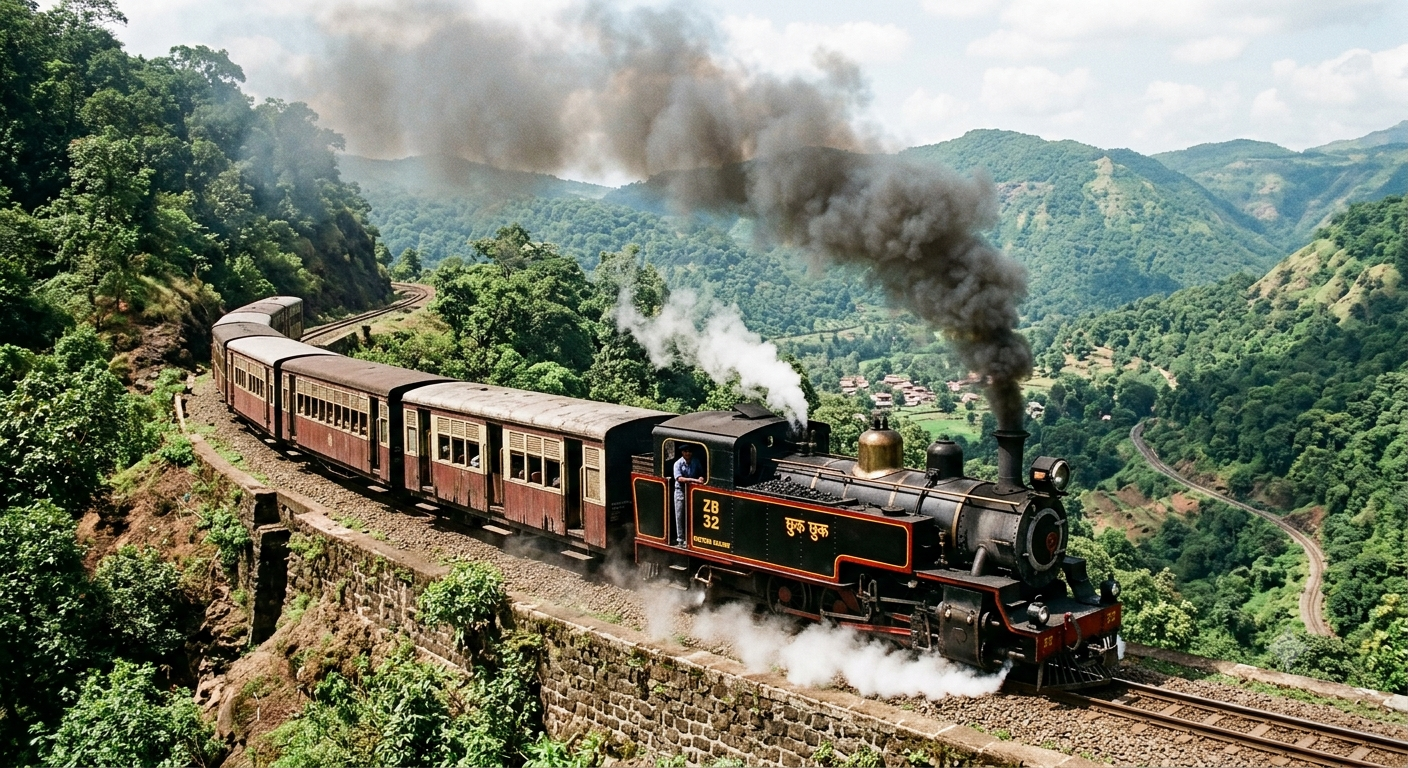
Traditional polluting trains on the country’s mountain and heritage railway routes will soon be replaced by modern hydrogen trains, offering a new travel experience. That is, instead of the chug-chug sound, hydrogen trains will operate. Taking a major step toward environmental conservation, Indian Railways has prepared a framework to introduce hydrogen trains on scenic mountain rail routes included in the UNESCO World Heritage list, such as Kalka-Shimla and Nilgiri.
According to senior railway officials, the successful trial of the country’s first indigenous hydrogen train has already been completed on the Jind-Sonnipat route in Haryana. Encouraged by this success, the railway administration is now preparing to operate these trains in fragile ecosystem areas such as Kalka-Shimla, Nilgiri Mountain Railway, and Darjeeling. RDSO has given the green light to the technical standards for safety and commercial trials. The safety arrangements of these trains have been modeled after international (especially German) standards.
Hydrogen Trains to be Equipped with Modern Facilities
This special hydrogen train being prepared for mountain heritage routes will consist of 10 coaches, comprising two hydrogen driving power cars and eight trailer coaches, accommodating around 2,600 passengers to travel together at a time.
Attractive Design: The exterior design of the train is quite sleek and aerodynamic.
Passenger Amenities: Inside the coaches, on the lines of Vande Bharat trains, comfortable seats, large glass windows, a digital passenger information system, and excellent lighting have been arranged so that tourists can fully enjoy the scenic natural views.
Modern Cockpit: The driver’s cabin of the train has been equipped with state-of-the-art facilities similar to an aircraft cockpit.
—
A Boon for the Environment and Wildlife
Compared to traditional diesel and steam engines, these hydrogen trains are extremely quiet. They produce about 60 percent less noise compared to older trains, ensuring that the peaceful environment and wildlife of the mountainous regions are not disturbed. This technology is entirely ‘zero-emission’ based, where electricity is generated through the chemical combination of hydrogen and oxygen. In place of smoke, only pure water and steam are emitted.
—