Indigenous Bullet Train is a Testament to India’s Technical Capability: Railway Minister Ashwini Vaishnaw
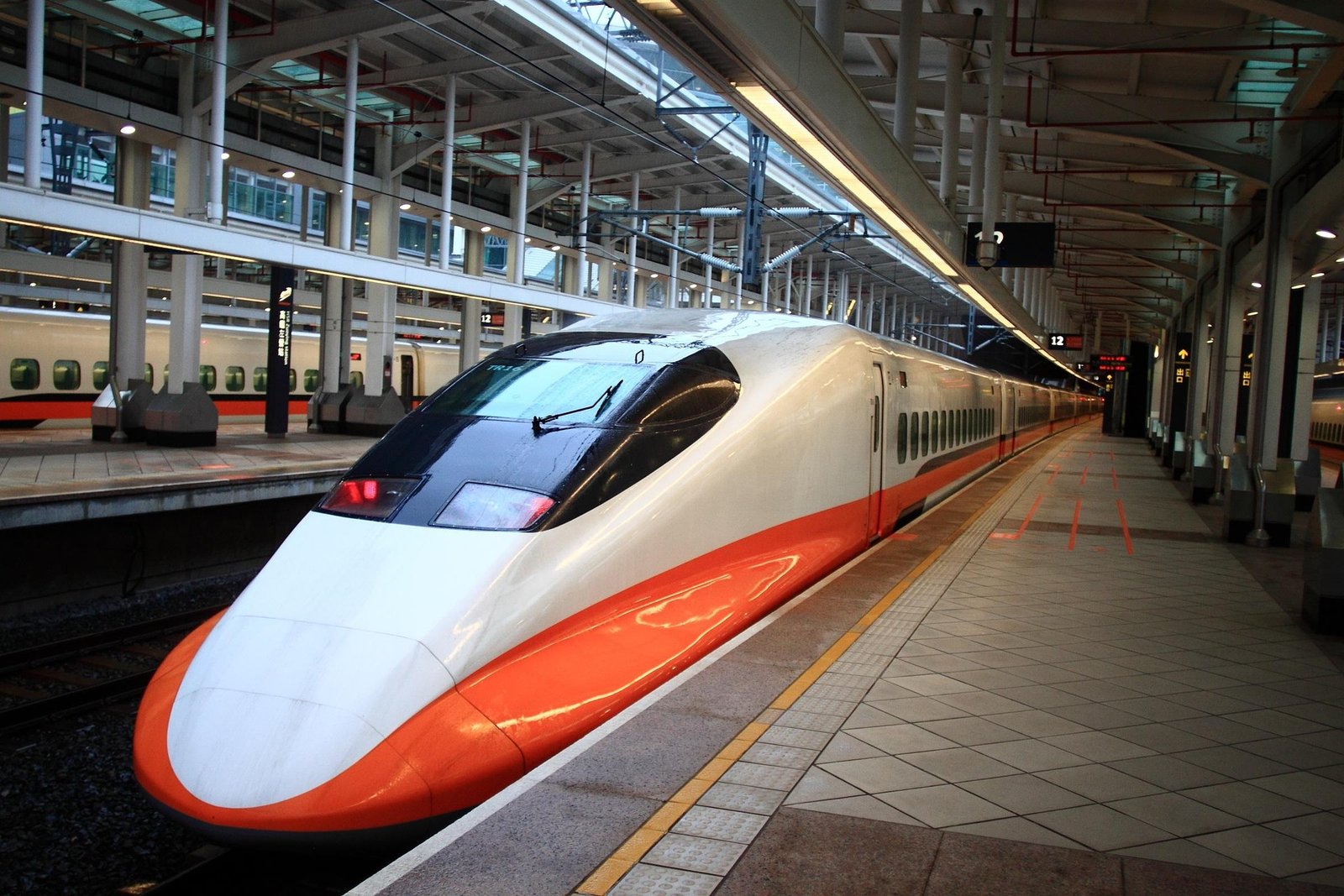
Bullet train being prepared for the Mumbai-Ahmedabad High-Speed Corridor
Shivani Singh
New Delhi, November 1.
Initiating a high-speed rail revolution in the country, Union Railway Minister Ashwini Vaishnaw has stated that with the manufacturing of India’s first indigenous bullet train, the nation is establishing a new milestone on the global railway map. Being manufactured for the Mumbai–Ahmedabad High-Speed Rail corridor at the BEML facility in Bengaluru, Karnataka, this state-of-the-art train project marks the entry of Indian Railways into a new era of self-reliance and modern engineering. According to the Railway Minister, this train is not only a testament to India’s technical capability but has also been completely developed indigenously, keeping India’s geography and passengers’ needs in mind.
Designed for the Mumbai–Ahmedabad corridor, this state-of-the-art bullet train has been tailored to suit Indian conditions, weather, and passenger safety. The train has a maximum test speed of 280 km/h and an operational speed of 249 km/h. It has a total train length of approximately 202 meters, featuring an 8-car configuration comprising 4 motor cars and 4 trailer cars. The total passenger capacity is approximately 557, which includes space for 2 seats reserved for Divyangjan (Persons with Reduced Mobility or PRM). It consists of seven standard-class cars with 3×2 seating and one executive-class car with 2×2 seating. For future operations, two 8-car trains can be coupled to form a 16-car train. The driver’s cab on each side is designed with an Intelligent On-Board Control system to support prompt decision-making and coordination with the Operations Control Centre.
To make the passenger journey comfortable, the train interiors are ergonomically designed keeping Indian anthropometric requirements in consideration. Features include ergonomically designed seats with adequate legroom, level boarding facilities, LED interior lighting, overhead baggage racks, and additional floor-mounted luggage stands for larger luggage. Furthermore, it offers power outlets for laptops and mobile devices, modern bio-digester toilets with minimal effluent, wide windows at every seat row, and a sealed, single-piece gangway that ensures comfortable movement between cars.
A comprehensive passenger information system has been integrated to keep travellers informed throughout the journey. LCD displays inside the cabins provide information in English, Hindi, and regional languages, supported by audio guidance through public address and automatic announcement systems. Emergency talk-back units in passenger cabins and vestibules enable passengers to communicate directly with the train crew in case of an emergency. Additionally, a Wi-Fi-based passenger infotainment system is provided, enabling passengers to access preloaded infotainment content.
Prioritizing accessibility and safety, the train floor is aligned with the platform height to facilitate level boarding. Retractable footsteps integrated into the doors help minimize the horizontal gap between the train and the platform. Wide doors designed for wheelchair movement and Braille-enabled information signage have also been installed. To provide comfort in every season, each car is equipped with two modern HVAC units that maintain a comfortable interior temperature and humidity.
To reduce noise and vibration inside the train, the car body and floor structure incorporate advanced sound insulation, noise-damping coatings, skirts, bogie covers, and fairings, making the journey exceptionally quiet and smooth. On the technical front, the train operates on a 25 kV traction system supplied through heavy compound catenary. Its regenerative braking system helps recover energy during braking, thereby contributing to greater energy efficiency.
Based on Computational Fluid Dynamics (CFD) simulations, the train’s nose and carbody profile have been completely optimized into an aerodynamic design. This design is effective in reducing air resistance, mitigating tunnel pressure waves and sonic booms, and reducing turbulence. The integrated rooftop HVAC profile, airflow deflectors, and sealed carbody balance external air pressure differences, providing passengers with a smooth and jerk-free travel experience.
————-